
How to become a University Professor
Section outline
-
-
-
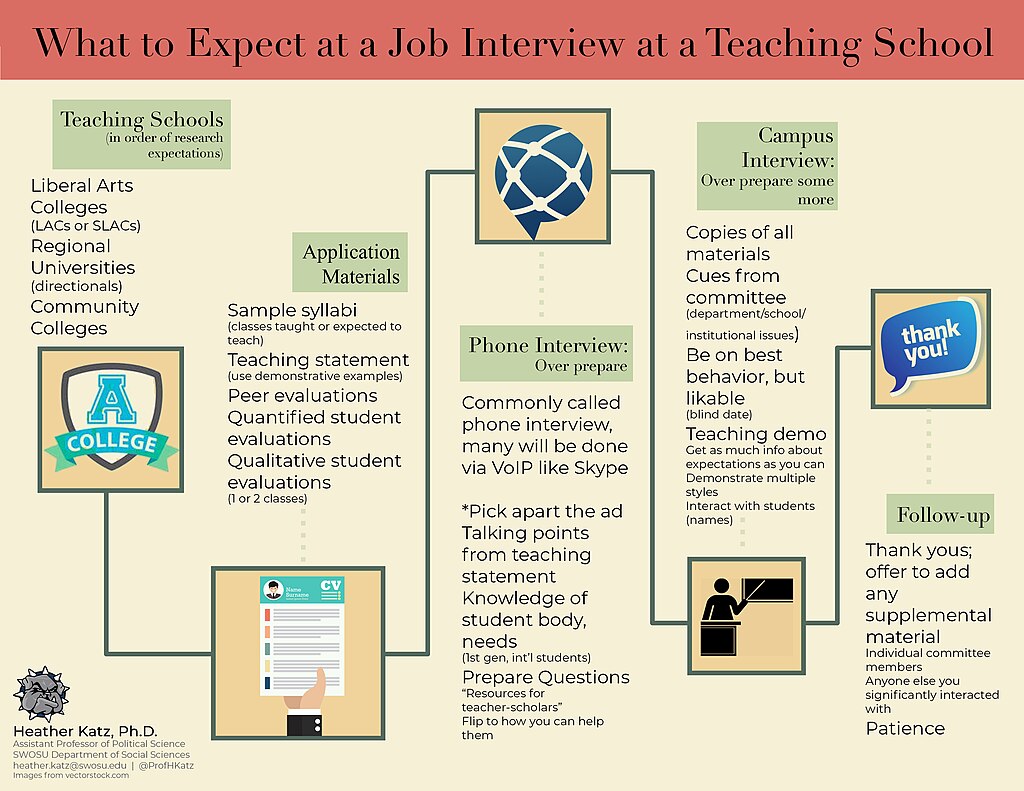
Interviewing for a job can be an enormously intimidating experience! Having a group of strangers staring at you (often unsmiling) through a series of stuffy and open-ended questions is not usually a fun pasttime. If you are already nervous and unsure of your qualifications or your interest in this job, an interview can make or break your success and potential hire.
It is important to understand that THEY need you. Otherwise there wouldn't be a posting and YOU wouldn't have been shortlisted. This is not to say that you should put your feet on the desk and finish your lunch while you answer questions....
Here are a few suggestions that I have noticed having been and interviewer and and interviewee many times in academia:
- Be prepared to know some things about the job that you applied to. It is frustrating for interviewers to realize that the applicant has NO IDEA about the job they applied for, nor the work that will be expected. Go to the website and have a look at the institution and the course/program that you are applying yourself to teach.
- Be prepared to highlight your experience, education or other relevant application data even though you already put that in your resume. Interviewers want to see that you can speak about yourself in an objective and confident manner. They also want to see that you can apply your skills and experience to the job itself!
- Prepare for some questions that you think you might get asked. You can watch lots of videos on the top questions for faculty interviews (but be careful not to let these intimidate you). Interviews, in my experience, often ask the following topics:
- Tell me about yourself.
- Tell me about a time when you handled conflict.
- Highlighting your resume, tell us why you are the best candidate for this job?
- Scenario questions related to a student who is not paying attention or who needs more help.
- Academic integrity or cheating of some kind.
- Problems with students in practical situations, like shop or preceptorships.
- Issues like students being late, classroom disruptions or students not doing well in class.
- Teamwork, collaboration and working in groups.
- Your availability and scheduling needs. You may have another job and need to have a flexible schedule. Be prepared to have a conversation that shows that you are interested in a flexible schedule but are also willing to compromise and negotiate. Class schedules are often very flexible - especially if they are desperate for experienced instructors.
- ALWAYS have a few questions to ask them! Never leave the interview without asking some questions about the job...for example: timelines, salary, schedule, student numbers, mentorship or orientation opportunities, supervisor information, resources to help with teaching strategies, etc. Asking them questions shows interest and engagement.
- Show you are confident by using deliberate mannerisms. Smile often and try to relax your face and body gestures. Take your time, use a notepad to jot down the questions or ideas, have a glass of water available and use it to take a moment (and to hydrate). Ask them to repeat the questions if you need to re-hear them. They should offer this but asking them to repeat the questions, when needed, shows that you are not afraid to clarify and are diligent and appreciate accuracy. Most important is to BE YOURSELF - genuineness is something people can sense.
NEXT STEPS: Once the interview is over, the chair of the committee will thank you for your time and should tell you next steps. They should tell you how long it should take to make a decision - or in other words, when you might expect to hear back. If they ask you for REFERENCES, this is a really great thing! This means they are interested and will seek more information to seal the deal!
When you select referees (people who give a reference) consider these things:
- Have a list of THREE minimum people who knows your work as a professional. They can be past supervisors, employers or colleagues who can speak to your work ethic and performance.
- Usually one person can be someone who knows you personally but this often carries less weight than someone who knows your work performance. Ask for clarification if you are not sure if you can use a personal reference.
- Reach out to your referees and make sure they are willing to be a reference. Also make sure they know what the job is you applied for and a potential date that they may be getting a call. You should also find out what contact information you can share with the interview panel. Some referees want to be called by phone, others by email and some don't care. There is nothing worse than getting a call about being a reference and having no idea you were on their list.
- Ensure that you have a few other people who can be a referee tucked in your back pocket in case they call asking you for more.
Below are a few videos that I picked out of hundreds that I felt might be helpful to this kind of academic interview. If you can, try to have FUN during the interview. Being personable is a very helpful attribute when you are applying to teach others new skills.
Activities: 5
-
-