Module 2: Types of WIL in Canada
| Site: | TRU Open Courses |
| Course: | Quality Work-Integrated Learning 2026 |
| Book: | Module 2: Types of WIL in Canada |
| Printed by: | Guest user |
| Date: | Monday, 12 October 2026, 3:42 PM |
Description
Table of contents
- Module 2
- 1. Explore Different Types of Work-Integrated Learning (WIL)
- 2. Community and Industry Research & Projects (CIRPS)
- 3. Apprenticeship
- 4. Co-operative Education
- 5. Internship
- 6. Professional Practicum or Clinical Placement
- 7. Entrepreneurship
- 8. Field Placement
- 9. Service Learning
- 10. Work Experience
- 11. Choosing the Right WIL Model for Your Organization
- Summary
- Knowledge Check
- References
Module 2

Photo: Courtesy of the WIL program at SFU
Welcome to Module 2: Types of WIL in Canada
This module will give you a foundational understanding of the nine different forms of work-integrated learning (WIL) and examples of how each type can support both your organization and students' learning. WIL is not a single program but a spectrum of structured work experiences that connect academic learning with meaningful workplace practice. Across British Columbia, the Yukon, and Canada more broadly, there are nine nationally recognized types of WIL, each with a distinct structure, focus, and value to WIL host organizations.
This module is designed as a flexible learning path. Many organizations work with one or two WIL types, while others explore several as their workplace needs change. You are encouraged to focus on the WIL types most relevant to your organization's capacity, projects, and recruitment needs. However, you are also welcome to complete all nine sections to broaden your understanding and explore additional ways to engage with WIL students.
In this module, you will learn how to:
- Identify the nine WIL types used in Canada
- Understand their key differences, benefits, and common uses by WIL host organizations
- Determine which WIL type or types align with your workplace capacity, supervision structure, and talent goals
Each section includes:
- A clear overview of the WIL type
- A real-world example or use case from a WIL host organization
- A short video and a link to the CEWIL Employer Toolkit
1. Explore Different Types of Work-Integrated Learning (WIL)
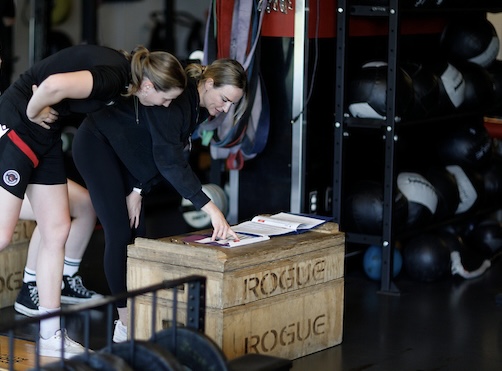
Photo: Courtesy of the Kinesiology Co-op program at Camosun College
Work-Integrated Learning (WIL) in Canada takes many forms, each designed to support different academic requirements, workplace realities, and student development pathways. Understanding these differences helps employers select options that align with their organizational capacity, supervision approach, and talent goals.
This module explores the nine WIL types recognized by CEWIL Canada and supported by post-secondary institutions across BC and the Yukon. You may choose to review all nine or focus on those most relevant to your workplace. Clicking each WIL type will give more information that will help determine the most relevant type for your organization. Each section is self-contained and designed to support flexible learning.
The Different Types of WIL:
- Community and Industry Research & Projects (CIRPS): Formerly known as Applied Research Projects, this WIL type engages students in applied research that supports organizational and community needs
- Apprenticeship: A formal model that combines paid work with technical training under the supervision of a certified journeyperson.
- Co-operative Education (Co-op): A structured model involving alternating terms of academic study and full-time paid work that are directly connected to a student’s academic program.
- Internship: A supervised and discipline-specific work experience that is intentionally structured, may be full-time or part-time, and paid or unpaid depending on the program and applicable legislation.
- Practicum or Clinical Placement: A mandatory supervised work experience required for professional licensure or certification in regulated fields.
- Entrepreneurship: Students develop or launch a business idea with institutional support such as mentorship, space, or funding.
- Field Placement: A short-term or part-time placement that is embedded in an academic program, often without formal certification or licensure requirements.
- Service Learning: Integrates academic learning with meaningful community service, where students work on projects identified by community partners.
- Work Experience: One or more work terms embedded within an academic program that provide relevant workplace exposure without a formal co-operative education structure.
2. Community and Industry Research & Projects (CIRPS)
What is CIRPS?
Community and Industry Research & Projects (CIRPS), formerly known as Applied Research Projects, is a structured work-integrated learning (WIL) model that places students in the role of researchers rather than employees. Students work on real challenges identified by community, non-profit, or industry partners, often within academic coursework.
CIRPS allows students to apply course concepts to authentic problems, while organizations receive evidence-based insights, recommendations, and solutions at low cost and low supervision.
Examples include:
- Consulting or feasibility projects
- Community-based research
- Service or product design and testing
Key Features
- May be paid or unpaid, full-time, or part-time
- Often completed remotely
- Flexible across disciplines and project types
- Often integrated into a course for academic credit
- Minimal supervision is required by partners
Why Choose CIRPS?
According to CEWIL Canada, CIRPS supports employers and community partners by:
- Addressing long-term challenges that are important but not urgent
- Producing well-researched, actionable solutions
- Requiring low time investment in supervision
- Offering remote or hybrid delivery to fit various operational models
Ideal for small and medium-sized organizations seeking strategic insight or innovation without hosting full WIL placements.
Project Lifecycle
CIRPS follows a structured partnership model, which typically includes:
- Onboarding: Define the challenge, assign a contact, and share relevant information. Scope and deliverables are finalized with the institution.
- Midpoint Check-In: Review progress and align expectations with organizational needs and course outcomes.
- Offboarding & Final Assessment: Students deliver a final report or presentation. Partners provide feedback and may explore future collaboration or hiring.
Some CIRPs lead to contract or permanent roles.
Real-World Example
As part of a Selkirk College CIRPs on rural climate resilience, a student partnered with local leaders to launch emergency preparedness campaigns. Using community-based social marketing, they helped three pilot communities develop evacuation plans and emergency kits, turning academic research into practical community safety outcomes.
3. Apprenticeship
What is Apprenticeship?
Apprenticeship is a formal, long-term model of work-integrated learning (WIL) that combines about 80% paid on-the-job training with 20% technical classroom instruction. It is designed for students pursuing careers in skilled trades, and usually takes 2 to 5 years to complete, depending on the trade.
Apprentices are sponsored by an employer and learn under the direct supervision of a certified journeyperson. The workplace must provide a safe learning environment where apprentices gain hands-on experience while actively contributing to operations.
Key Features
- Paid employment from day one
- A formal agreement between the apprentice and employer
- Technical training delivered by an institution, often block-release basis
- Supervised mentorship by a certified journeyperson
- Completion leads to certification, including the Red Seal Program
Why Choose Apprenticeship?
Hiring an apprentice supports long-term talent development while directly benefiting your business:
- Develop a strong talent pipeline: Train employees with job-specific knowledge and cultural fit.
- Improve safety and productivity: Employees trained by journeypersons typically demonstrate better performance and lower incident rates.
- Increase retention: Apprentices who become certified tradespeople tend to stay with employers who invested in their learning.
- Demonstrate investment in workforce development: Positions your organization as an employer of choice in your industry.
- Receive financial support: Many provinces offer grants, wage subsidies, and tax incentives for sponsoring employers.
Additional Pathways to Consider
- Engage High School Students: Start early by participating in provincial youth apprenticeship programs.
- Hire Recent Graduates: Hire certificate-program graduates and sponsor them through apprenticeship training.
- Transition Existing Workers: Support the skill development of current employees through apprenticeship agreements.
Real-World Example
A small construction company in northern BC sponsored a high school graduate through a Carpentry Apprenticeship. Over four years, the apprentice completed hands-on training and technical instruction through a local college. After earning Red Seal certification, the apprentice stayed on as a site supervisor and later began mentoring new apprentices, creating a cycle of workforce development within the company.
4. Co-operative Education
What is Co-op?
Co-operative Education (Co-op) is a structured work-integrated learning (WIL) model where students alternate between periods of academic study and paid, full-time work terms directly related to their field of study. These work terms integrate classroom learning with real-world application.
Co-op is the only WIL model accredited by CEWIL Canada and includes specific standards such as minimum work hours, employer evaluations, and institutional oversight. Work terms typically last 4, 8, or 12 months and must meet a minimum of 420 hours each term.
Examples of Co-op placements:
- Social media coordinator for a Marketing student
- Software developer for a Computer Science student
- Research assistant for a Health Sciences student
Key Features
- Paid, full-time work terms alternating with academic study
- A minimum of 420 hours per term (typically 4 months)
- Supervised by the employer and evaluated by the institution
- Midpoint and final assessments required
- Strong focus on skill development and workplace integration
Why Choose Co-op?
Employers benefit by accessing project-ready talent and developing long-term recruitment strategies. According to CEWIL Canada and WIL partners across BC:
- Fill short-term staffing gaps
- Increase capacity for ongoing or new projects
- Build a recruitment pipeline with students who understand your workplace
- Bring fresh ideas and up-to-date knowledge
- Access wage subsidies and government-funded programs
Co-op is especially valuable for employers looking to expand innovation, improve project delivery, and reduce hiring risks.
Project Lifecycle
Co-op follows a highly structured, four-phase life cycle:
- Onboarding: Define goals, align with co‑op timelines, and work with the institution to create the posting, recruit, and hire. Funding may be explored early in the process.
- Midpoint Check-In: Review progress with the student and co‑op coordinator to discuss performance and contributions.
- Final Assessment: Complete the final employer evaluation; students submit a reflective report or presentation.
- Offboarding: Review outcomes and consider rehiring or re-engaging in future co‑op cycles.
Real-World Example
One Voice, a small organization focused on process optimization and education, hired four co-op students and two interns during the pandemic. Using 75% wage subsidies, they expanded operational capacity while supporting student development. Co-op students participated in agile workflow practices including daily scrums, sprint reviews, and retrospectives, and were fully integrated into the organizational workflow.
Another employer, Query Technologies, conducted virtual midpoint reviews with UVic co-op students and praised the effectiveness of the process. One of the co-op students was hired full-time.
5. Internship
What are Internships?
Internships are structured, discipline-specific work-integrated learning (WIL) placements that offer students full-time work experience, typically 12 to 16 months, either during or after their academic program. These placements can be paid or unpaid and may be for academic credit.
Internships are designed to be intentional and semi-structured, with a strong emphasis on supervision, mentorship, and student development. They allow employers more flexibility than Co-ops while still offering a valuable, skill-building experience to the student.
Examples of internship placements:
- Graphic design intern for a marketing agency
- HR intern supporting recruitment and onboarding
- Research assistant in environmental sciences
- Communications intern in a non-profit organization
Key Features
- Paid or unpaid, full-time work experience
- Typically lasts 12 to 16 months
- Can be credit-bearing or non-credit-bearing
- Occurs during or after coursework
- Requires supervision and mentorship
- Usually includes final evaluation; midpoints vary by program
Why Choose Internships?
Internships are a powerful way for employers to increase capacity, mentor future professionals, and contribute to skill development in their field. According to CEWIL, internships help host organizations:
- Fill short-term staffing needs
- Support day-to-day operations with motivated students
- Build your long-term talent pipeline
- Get resource support for existing or new projects
- Boost your organization's visibility and reputation with students and institutions
Internships offer more flexibility than some other WIL types and can be customized to fit unique roles and timelines.
Project Lifecycle
Internships follow a four-phase structure (programs may vary):
- Onboarding: Define the business need and student role. Consider budget, mentorship capacity, and desired length of the placement. Create clear job descriptions and outcomes to support recruitment.
- Midpoint Check-In: While not always required, a midpoint review is recommended to assess progress, provide feedback, and support reflection and mentorship.
- Final Assessment: Complete an end-of-term evaluation (institutional involvement varies). If funding was received, you may be required to submit feedback to the funding agency. Evaluate outcomes based on learning goals, skills, and business contributions.
- Offboarding: Reflect on return on investment and consider integrating WIL into your long-term recruitment and training strategy. Many employers use internships to refine future internship roles or convert interns into hires.
Real-World Examples
The Victoria Chamber of Commerce created an internship program to support key business projects. By assessing organizational needs and identifying skill gaps, they matched interns with revenue-generating activities—demonstrating a clear link between internship outcomes and business goals.
At RebalanceMD, interns worked alongside a multi-disciplinary team of healthcare professionals. Through hands-on mentorship and feedback, students built professional competencies and gained clarity about their career goals while contributing to patient-focused outcomes.
6. Professional Practicum or Clinical Placement
What is a Professional Practicum or Clinical Placement?
A Professional Practicum or Clinical Placement is a mandatory, unpaid, supervised work-integrated learning (WIL) experience required for professional licensure or certification in fields such as healthcare, education, therapy, and social work.
Students in these placements are typically in the final stages of their academic program and work under the guidance of a registered or licensed professional (e.g., nurse, teacher, therapist). The focus is on developing regulated, practice-ready skills through hands-on experience, rather than on independent workloads or performance-based outputs.
Common practicum areas:
- Nursing and medical imaging
- Early childhood education
- Social work and psychology
- Kinesiology and therapeutic recreation
Key Features
- Unpaid and may be full-time or part-time
- Supervised by a certified or licensed professional
- Required for certification or registration in regulated fields
- Closely tied to program accreditation requirements
- For credit and overseen by the student’s post-secondary institution
- Often uses national platforms (e.g., HSPnet for health sciences) for placements
Why Choose Professional Practicums?
Employers and professionals benefit by shaping the next generation of licensed practitioners within their profession:
- Mentor future professionals while contributing to the sector’s talent development
- Build leadership capacity by involving your team in student training
- Help meet short-term service demands with supervision support
- Establish long-term partnerships with programs and institutions
- Gain fresh perspectives and support innovation within supervised practice
Project Lifecycle
Professional practicum placements follow a structured model with institutional and regulatory oversight:
- Onboarding: Start discussions early with the post-secondary institution (PSI). Understand program requirements, confirm supervision capacity, and assess alignment with student learning objectives. Site assessments and credential verification may be required.
- Midpoint Check-In: Participate in a reflective check-in with the student and institutional contact (faculty or advisor). Discuss student performance, learning goals, and any necessary adjustments. You may complete progress forms or attend a scheduled meeting.
- Final Assessment: Complete final evaluations with institutional support. You may verify hours, assess professional competencies, and provide feedback to support the student’s continued development.
- Offboarding: Reflect on your experience and explore future opportunities to host students. Practicum partnerships frequently become recurring annual relationships with PSIs and may open doors to students from other regulated programs.
Real-World Example
At Okanagan College, students in the Therapist Assistant Diploma program complete four clinical practicums under the supervision of occupational, physical, or recreational therapists. Supervisors must meet strict credentialing standards set by national accrediting bodies. Once approved, clinical sites often become long-term partners, offering placements year after year and contributing to student readiness for professional certification.
7. Entrepreneurship
What is Entrepreneurship in WIL?
Entrepreneurship-based work-integrated learning (WIL) allows students to start and grow their own business while receiving mentorship, guidance, and academic credit. These experiences are often supported by campus incubators, accelerators, or entrepreneurship programs and can involve students from any discipline.
Students may:
- Develop a business plan or pitch
- Launch a product or service
- Collaborate with start-ups or local entrepreneurs
- Conduct market research, prototype testing, or early-stage branding
This model supports student innovation and contributes to community business development.
Key Features
- Can be self-directed or involve working with a start-up
- Often connected to campus incubators or accelerators
- Supervision may be provided by a mentor, instructor, or entrepreneur-in-residence
- May be full-time or part-time
- Usually for credit and may be mandatory or elective
- No competitive job posting required
Why Choose Entrepreneurship?
Entrepreneurship WIL experiences offer unique benefits to employers and mentors:
- Access innovative ideas from entrepreneurially minded students
- Mentor or coach emerging talent
- Contribute to early-stage projects and help test or refine business models
- Partner on short-term or research-based initiatives
- Engage students who are self-directed and adaptable
Employers and mentors can participate in a range of roles:
- Mentor: Offer guidance, answer questions, or coach teams.
- Partner: Work with student entrepreneurs through embedded classroom experiences.
- Supervisor: Bring students into your start-up or scale-up to support business growth.
Project Lifecycle
Entrepreneurship WIL experiences typically follow one of several formats:
- Onboarding: Students join through entrepreneurship courses, incubators, or special project calls. Mentors and partners are matched based on their industry knowledge or alignment with student ideas.
- Midpoint Check-In: May include coaching sessions, pitch reviews, or guided checkpoints to review progress or support project pivots.
- Final Assessment: Students often complete a business pitch, a capstone project, or a demo day presentation. Assessments focus on creativity, execution, problem-solving, and alignment with course objectives.
- Offboarding: Review student contributions and offer feedback. Some organizations continue to stay involved as future mentors, funders, or collaborators.
Real-World Examples
- At Simon Fraser University, the Charles Chang Institute for Entrepreneurship runs an Embedded Mentor program. Mentors-in-Residence participate in interdisciplinary classrooms to support student-led ventures throughout development.
- At the Université de Sherbrooke, the Desjardins Entrepreneurship Accelerator connects students across all faculties with local start-ups for hands-on project collaboration.
- The University of Toronto runs a course called Exploring New Ventures through its Centre for Entrepreneurship, where students apply entrepreneurial concepts in collaboration with local organizations.
8. Field Placement
What is a Field Placement?
Field Placements are short-term, part-time work-integrated learning (WIL) experiences that give students the chance to apply their academic learning in real-world settings—often as part of a course or program requirement. These placements are typically unpaid and offer flexible, hands-on experience without requiring supervision from a licensed professional.
Unlike co-op or practicum placements, field placements are less structured, vary by program, and are ideal for project-based or support-focused roles that don’t fit into more formal WIL models.
Examples of field placement settings:
- Social service and nonprofit agencies
- Public health units
- Marketing and communications offices
- Hospitality, culinary, and tourism businesses
- Event planning, bookkeeping, or administrative roles
Key Features
- Unpaid, short-term, and usually part-time
- For academic credit; may be mandatory or elective
- Often tied to specific programs or disciplines
- May not require supervision from a licensed professional
- Highly flexible in structure, timelines, and evaluation
Why Choose Field Placement?
Field placements allow organizations to engage with students in ways that align with their capacity and project needs. According to CEWIL and institutional partners:
- Support short-term or resource-light projects
- Tap into student creativity and innovation
- Test and explore emerging roles or functions
- Offer mentorship without long-term commitments
- Build long-term partnerships with academic programs
Ideal for employers that want to support student learning without taking on full-term placements.
Project Lifecycle
Although less formal, field placements follow a general process:
- Onboarding: Collaborate with the post-secondary institution (PSI) to outline your business needs, project goals, and timelines. PSIs help align your role with program expectations and student learning outcomes.
- Midpoint Check-In: Some PSIs require progress updates, informal site visits, or evaluation forms. These help monitor the student’s development and ensure alignment with program goals.
- Final Assessment: Most institutions ask for a short evaluation of the student’s contribution. This provides valuable feedback for both student and institution.
- Offboarding: Consider future roles or projects for future students. You may be asked for feedback on the placement process or invited to continue as a WIL partner.
Real-World Examples
At Conestoga College, students in the Advertising and Marketing Communications program complete a 5-week, full-time field placement just before graduation. Students apply their skills in content creation, branding, and public relations while receiving feedback from professionals.
Similarly, Langara College’s Social Service Worker students complete part-time placements during the school year, followed by a full-time block placement at a different agency. This dual structure allows students to apply what they have learned across multiple settings.
9. Service Learning
What is Service Learning?
Service Learning, often called Community Service Learning (CSL), is a form of work-integrated learning (WIL) that integrates meaningful volunteer service with classroom instruction and critical reflection. Students address real community needs while achieving course learning objectives.
These unpaid placements or projects are typically part-time, short-term, and integrated into academic coursework. Projects can be initiated by either the organization or the post-secondary institution (PSI).
Examples include:
- Supporting local nonprofit organizations with event planning or communications
- Assisting with program evaluations or survey analysis
- Designing public engagement campaigns
- Collaborating on fundraising or social media strategy
Key Features
- Unpaid, part-time (typically 3 to 4 hours per week over one term)
- Mandatory and credit-bearing
- No competitive hiring process
- Faculty-directed and includes student reflection activities
- Evaluation is led by the PSI
- Can be individual or group-based
- May be in person, virtual, or hybrid
Why Choose Service Learning?
Service learning allows your organization to collaborate meaningfully with students while advancing your community-focused goals. According to CEWIL, the top ways service learning can support your business objectives include:
- Accessing innovative ideas that enhance impact
- Completing short-term projects with minimal supervision
- Receiving resource support for new or existing initiatives
- Providing leadership development opportunities for your staff
- Forming reciprocal partnerships with local institutions
CSL is particularly useful for nonprofit organizations, public organizations, and small businesses seeking student support without formal hiring or intensive supervision.
Project Lifecycle
Service learning follows a structured four-stage engagement process:
- Onboarding: Begin conversations early with your PSI contact to align student learning objectives with your organization’s needs. Clarify expectations, project scope, risk management, and available resources. Often a formal agreement or letter of understanding may be required.
- Midpoint Check-In: Conduct a brief, informal check-in with students and PSI staff to ensure the project is on track. Use this time to address any concerns and provide feedback to support student learning.
- Final Assessment: Participate in a final evaluation, which may include surveys, reports, or informal conversations. Your feedback may influence the student’s course grade and help shape future project improvements.
- Offboarding: Review student work and assess opportunities for future collaboration. Some partners continue to work with students through new placements or extended projects. Others may choose to recruit students for future roles.
Real-World Examples
- iSisters, an Ottawa-based nonprofit organization, partnered with the University of Ottawa graduate students to create a digital campaign for its 20th anniversary. Many students’ recommendations were implemented within weeks.
- At Brock University, neuropsychology students collaborated virtually with seniors to co-create music playlists through the Music and Memory program, helping address isolation and enhance well-being.
- Ontario Tech University students joined the Love Your Lake initiative, to clean and analyze waste patterns along Lake Ontario. Students provided research-informed recommendations to improve environmental sustainability.
10. Work Experience
What is Work Experience?
Work Experience is a flexible, non-traditional work-integrated learning (WIL) model designed to meet the needs of organizations and post-secondary institutions (PSIs) that do not have access to formal Co-op or Internship programs. It creates opportunities for customized experiential learning where students work full-time on organizational tasks, projects, or problem-solving activities.
This model is typically less prescriptive, can vary in structure, and offers both the employer and student the chance to co-design the learning experience based on needs and capacity.
Examples include:
- Hiring a student to manage a digital content archive over the summer
- Engaging multiple students to support a marketing campaign or business expansion
- Supporting new service design in a nonprofit with limited full-time staff
Key Features
- Full-time or part-time, often short-term and project-based
- Paid through wages, stipends, or honoraria or completed for academic credit
- Highly customizable structure, roles, and timelines
- Available across a wide range of disciplines and institutions
- Supervision required but can be informal and flexible
- Often attracts students seeking opportunities outside of traditional co-op programs
Why Choose Work Experience?
Work experience is ideal for employers seeking a practical, low-barrier entry into WIL partnerships. According to CEWIL Canada, this model can help:
- Fill short-term staffing needs
- Leverage student support during busy periods or for new projects
- Increase organizational capacity for specific initiatives
- Develop a future talent pipeline with fewer formal requirements
- Create mutually beneficial roles that support student and business development
It is especially effective for small to mid-sized organizations, community-based partners, or employers with limited time for structured supervision.
Project Lifecycle
Despite its flexible nature, Work Experience still benefits from following a structured lifecycle:
- Onboarding: Define your business goals and the skills you are seeking. Identify the required placement length and available budget. Collaborate with a PSI to post the role or recruit directly. Mentorship and supervision plans should be clear, even if they are informal.
- Midpoint Check-In: Conduct informal feedback conversations or evaluations. Many institutions recommend midpoint reflections, but these are not always mandatory. Check whether the student’s goals and your business objectives still align, and adjust them if needed.
- Final Assessment: While formal reports may not be required, it is helpful to conduct a wrap-up discussion or exit interview with the student. Review achievements, provide professional references, and consider future recruitment opportunities.
- Offboarding: Review the success of the work experience in achieving your goals. Could the student role or structure be adapted for a future opportunity? Gather informal feedback from your team and consider expanding your involvement in WIL.
Real-World Examples
At Brock University, students from the Interactive Arts & Sciences program joined the Canada Summer Games digital media team to create a short animation series. The project used a flexible structure that allowed different students to contribute at various points. This format supported both the Games’ creative timeline and the students’ learning goals, demonstrating the power of a multi-student, project-based Work Experience model.
Another example from UBC’s Work Learn program involved a lab-based student who supported ongoing experiments. The student completed onboarding with a project handover report, trained alongside peers, and met weekly with their supervisor to review progress, clarify goals, and refine tasks.
11. Choosing the Right WIL Model for Your Organization

Photo: Courtesy of the WIL program at SFU
Introduction
Now that you’ve explored the nine different types of work-integrated learning (WIL) offered across BC, Yukon, and Canada, this section helps you determine which model(s) may be the best fit for your organization.
Not every WIL type will suit your structure, size, or goals and that is expected. The strength of WIL lies in its flexibility. Whether you are in the public, private, or non-profit sector, there are WIL models that support your talent pipeline, innovation goals, and community impact.
- Reflect on your organization’s current capacity and staffing needs
- Identify which WIL types align with your goals, timeline, and supervision availability
- Consider what support (e.g., funding, mentorship, institutional partnerships) may help you succeed
- Take next steps in planning or initiating a WIL partnership
At the end of this module, you will complete a short activity that clarifies your WIL fit and provides a shortlist of models to explore further.
1. Reflecting on Your Organization’s Readiness
Before choosing a WIL type, consider:
- Your project or talent needs: Do you need help on short-term projects, daily operations, innovation initiatives, or research?
- Timeline & availability: Do you have capacity for a 4 to 8 month co-op student, or would a short-term intern or field placement work better?
- Supervision: Can someone on your team offer mentorship and regular feedback? Do you have a licensed professional for a practicum, or a journeyperson for an apprenticeship?
- Work environment: Is your workplace in-person, remote, or hybrid? Can students safely complete tasks within your structure?
- Funding support: Would access to wage subsidies or grants influence your decision? Some models may be more commonly eligible for financial supports.
2. Common Organizational Scenarios and What Might Fit
These pairings reflect supervision capacity, structure, and examples outlined in each of the nice WIL models and toolkit descriptions.
3. WIL Readiness Checklist
The checklist is designed for WIL host organizations to assess their needs and outline practical steps for setting up WIL opportunities for students. Download the checklist with the button below.
Summary

Photo: Courtesy of the WIL program at SFU
In this module, you:
- Gained a clear understanding of the nine nationally recognized Work-Integrated Learning (WIL) types in Canada, such as Co-op, Apprenticeship, Internships, Field Placements, and Service Learning, each offering unique structures, supervision requirements, and benefits for employers.
- Used a customizable learning path to explore WIL types that best fit your organization’s size, capacity, and goals, with real-world examples, CEWIL-endorsed videos, and links to national toolkits.
- Completed a reflection activity to assess your organizational readiness and identify the best-fitting WIL models, helping set the foundation for future planning, recruitment, and partnership with post-secondary institutions.
If you have any questions regarding this module or would like to learn more about Work-Integrated Learning, please email info@acewilbc.ca
Knowledge Check
Photo: Courtesy of the WIL program at SFU
Test your understanding of foundational Work-Integrated Learning (WIL) concepts and the nine types of WIL in Canada
- Covers Modules 1 and 2
- Includes 10 multiple-choice questions
- Worth 20% of your course certificate
- Unlimited attempts
References
- Nielsen, D., Ballantyne, E., Murad, F., & Fournier, M. (2022, September 7). 1.2 Types of Work-Integrated Learning (WIL). Pressbooks. https://opentextbc.ca/workintegratedlearning/chapter/types-of-wil/
- Association for Co-operative Education and Work-Integrated Learning BC/Yukon. (2023, November 7). What is WIL? | ACE-WIL | Association for Co-operative Education and Work-Integrated Learning BC/Yukon. ACE-WIL | Association for Co-operative Education and Work-Integrated Learning BC/Yukon | Association for Co-operative Education and Work-Integrated Learning BC/Yukon. https://acewilbc.ca/what-is-wil/
- Work-integrated learning. (n.d.-b). https://cewilcanada.ca/CEWIL/About-Us/Work-Integrated-Learning.aspx
- Employer Tool Kit Home - WIL Type: CIRPS. (n.d.). https://cewilcanada.ca/CEWIL/Resources/Employer-Community-Partners/Employer-Tool-Kit-Folder/Employer-Tool-Kit.aspx?WebsiteKey=70188082-f13b-461c-8c8d-74e0e6c01c18&6ceb5530e7c6=7#6ceb5530e7c6
- Employer Tool Kit Home - WIL Type: Apprenticeship. (n.d.). https://cewilcanada.ca/CEWIL/Resources/Employer-Community-Partners/Employer-Tool-Kit-Folder/Employer-Tool-Kit.aspx?WebsiteKey=70188082-f13b-461c-8c8d-74e0e6c01c18&6ceb5530e7c6=8#6ceb5530e7c6
- Employer Tool Kit Home - WIL Type: Co-operative Education. (n.d.). https://cewilcanada.ca/CEWIL/Resources/Employer-Community-Partners/Employer-Tool-Kit-Folder/Employer-Tool-Kit.aspx?WebsiteKey=70188082-f13b-461c-8c8d-74e0e6c01c18&6ceb5530e7c6=9#6ceb5530e7c6
- Employer Tool Kit Home - WIL Type: Entrepreneurship. (n.d.). https://cewilcanada.ca/CEWIL/Resources/Employer-Community-Partners/Employer-Tool-Kit-Folder/Employer-Tool-Kit.aspx?WebsiteKey=70188082-f13b-461c-8c8d-74e0e6c01c18&6ceb5530e7c6=10#6ceb5530e7c6
- Employer Tool Kit Home - WIL Type: Field placements. (n.d.). https://cewilcanada.ca/CEWIL/Resources/Employer-Community-Partners/Employer-Tool-Kit-Folder/Employer-Tool-Kit.aspx?WebsiteKey=70188082-f13b-461c-8c8d-74e0e6c01c18&6ceb5530e7c6=11#6ceb5530e7c6
- Employer Tool Kit Home - WIL Type: Internships. (n.d.). https://cewilcanada.ca/CEWIL/Resources/Employer-Community-Partners/Employer-Tool-Kit-Folder/Employer-Tool-Kit.aspx?WebsiteKey=70188082-f13b-461c-8c8d-74e0e6c01c18&6ceb5530e7c6=12#6ceb5530e7c6
- Employer Tool Kit Home - WIL Type: Professional Practicum/Clinical Placement. (n.d.). https://cewilcanada.ca/CEWIL/Resources/Employer-Community-Partners/Employer-Tool-Kit-Folder/Employer-Tool-Kit.aspx?WebsiteKey=70188082-f13b-461c-8c8d-74e0e6c01c18&6ceb5530e7c6=13#6ceb5530e7c6
- Employer Tool Kit Home - WIL Type: Community Service Learning. (n.d.). https://cewilcanada.ca/CEWIL/Resources/Employer-Community-Partners/Employer-Tool-Kit-Folder/Employer-Tool-Kit.aspx?WebsiteKey=70188082-f13b-461c-8c8d-74e0e6c01c18&6ceb5530e7c6=14#6ceb5530e7c6
- Employer Tool Kit Home - WIL Type: Work Experience. (n.d.). https://cewilcanada.ca/CEWIL/Resources/Employer-Community-Partners/Employer-Tool-Kit-Folder/Employer-Tool-Kit.aspx?WebsiteKey=70188082-f13b-461c-8c8d-74e0e6c01c18&6ceb5530e7c6=15#6ceb5530e7c6
- SUPPORTING BUSINESS OBJECTIVES WITH PROJECTS and RESEARCH. (2021). In CEWIL [Report]. https://cewilcanada.ca/common/Uploaded%20files/Public%20Resources/WIL%20Resources/community-and-industry-research-and-projects__8.5x11.pdf
- SUPPORTING BUSINESS OBJECTIVES WITH APPRENTICESHIP. (2021).
- SUPPORTING BUSINESS OBJECTIVES WITH CO-OP. (2021). https://cewilcanada.ca/common/Uploaded%20files/Public%20Resources/WIL%20Resources/co-op__8.5x11.pdf
- Supporting Business Objectives with Internship. (2021).
- Professional Practicum and Clinical Placement guide. (2021).
- CEWIL. (2021). Entrepreneurship.
- SUPPORTING BUSINESS OBJECTIVES WITH FIELD PLACEMENTS. (2021).
- SUPPORTING BUSINESS OBJECTIVES WITH SERVICE LEARNING. (2021). In CEWIL.
- CEWIL. (2021b). Work Experience: a guide for employers.