Unit 3: The Communications Package
3.4: Leveraging Community for the Cause
In this section, we will examine two examples of professional blogs used as forms of training and advocacy. This genre, which is the final element of the communications package for this course, has become a ubiquitous means of connecting professional, social, and issues-based communities around important conversations. As such, as a tool for knowledge dissemination, it works well across a range of intent from information sharing, through engagement and affinity, to persuading action and change.
READ
-
Read Section 19 of Chapter 33, “Using Social Media for Digital Advocacy,” from The Community Tool Box (Center for Community Health and Development, n.d.).
-
Now read the shorter blog post on “The Power of Social Media for Advocacy and Social Change” (Ruiz, 2023).
This resource provides information on the potential for social media mechanisms to work for knowledge dissemination (such as sharing the findings of a policy brief), but it also functions as an example of a professional blog post that is required as part of the Communications Package assignment.
LESSON
Of course, in the broader digital environment, multiple platforms for social media engagement exist, each comprising multimodal functions that can be leveraged for strategic communication. The challenge in developing strategic communication for this environment is the sheer range and complexity of options.
In addition to the ideas presented in the readings for this unit, we can isolate some key questions to shape rhetorical decisions when working with social media; these questions will, of course, look very familiar by now, as they are related to audience, message, and intent. However, the unique features and diversity of choice within these mechanisms shapes our decision-making. The nuances of the media environment are important. Each platform, commercial or non-profit, public or private, carries a unique culture and set of functional capabilities. We intuitively know this from our own personal experiences. We know what we will find on LinkedIn compared to TikTok!
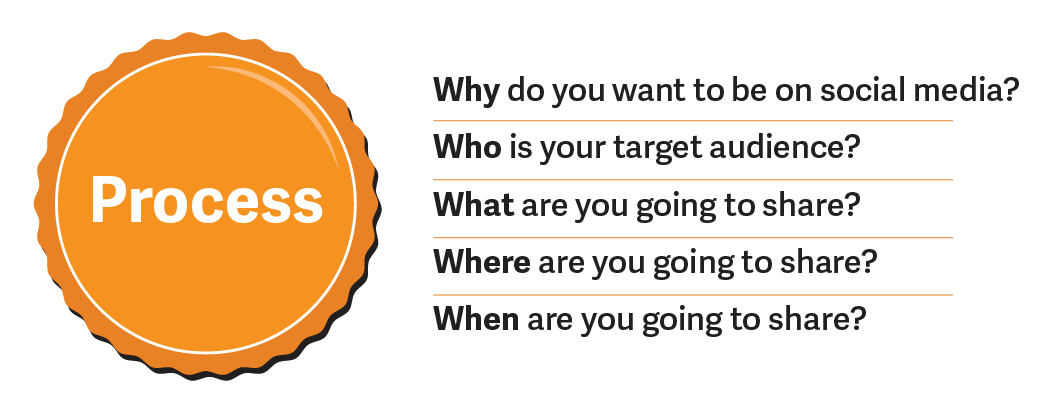
As with any other communication challenge, we need to find alignment between the selection of intent (the why), audience (the who), message (the what), and mechanism (the where and when). Within the social media environment, we need an extra step of differentiating an appropriate platform and combination of modes; what kind of multimodal experience would be best? This includes considering relationships between audiences and multimodal potential of different platforms, along with metrics on demographic reach of any platform.
Designing the Professional Blog
For this final piece of the communication project, many of the variables have been set for you. Professional blog posts, such as those seen on LinkedIn or other industry sites, are text heavy with some use of visuals to support and engage viewers; they are shaped for a professionally oriented context focused on networking, training, and other forms of community connectivity. These features will help you to shape the message-audience relationship for this element of the communications package.
EXAM PREPARATION
Students in CMNS 3241 will have a final exam for this course. Information from Unit 3 that will be covered on the final exam:
-
Salient characteristics of different modes of communication
-
Best-practice techniques for the development of infographics, presentations, and professional blogs or stories
Unit Tasks 6, 7, and 8 (6% of course grade), and Assignment 3: Communications Package (20% of course grade)
ASSIGNMENT TIME
Once you have completed Unit 3, you have the tools you need to complete Assignment 3: Communications Package.
CMNS 3241 students, please log into TRU Moodle for assignment instructions.
-
Unit Tasks 6, 7, and 8 (6%) – please submit as one document
-
Unit Task 6: Determine Goal, Audience, and Messages (2%)
-
Unit Task 7: Leveraging Visual Communication (2%)
-
Unit Task 8: Connecting the Visual and the Oral (2%)
-
-
Assignment 3: Communications Package (20%)